

Supporting your menstrual cycle, fertility, and wellbeing through East Asian medicine
Written by Mariana Noelle, Registered Acupuncturist @ Local Health Integrative Clinic
If you’ve ever planned your life around your period, wondered why your mood or energy changes throughout the month, or felt overwhelmed by trying to conceive, you know that reproductive health is about much more than hormones.
These experiences affect how we feel in our bodies, move through our days, and connect with ourselves. Too often, difficult symptoms are dismissed as simply part of being a woman. I believe they deserve to be taken seriously. Our bodies are constantly communicating with us, and learning to understand those signals can be an important part of caring for ourselves.
In East Asian medicine, the menstrual cycle is understood within the context of the whole person. Digestion, circulation, emotional wellbeing, sleep, and our responses to stress are all part of the picture. Acupuncture, nutrition, and individualized care can offer a traditional perspective that complements conventional healthcare throughout the different stages of reproductive life.
A Different Way of Understanding Hormone Balance
Conventional medicine looks at hormones such as estrogen, progesterone, FSH, and LH to understand reproductive function. Traditional Chinese Medicine (TCM) approaches the body through a different lens, considering patterns of health through concepts such as Qi, Blood, Yin, and Yang.
Liver Qi is traditionally associated with the smooth movement of Qi and may be considered when addressing stress, irritability, and premenstrual symptoms. Kidney energy is associated with growth and reproductive function, while Spleen Qi relates to digestion and nourishment. Qi and Blood are also considered when assessing patterns involving energy, circulation, and menstrual flow.
These aren’t direct equivalents of hormones or organs. They are part of a traditional framework for understanding the body’s patterns and recognizing that two people with similar symptoms may need very different approaches.
Acupuncture and Menstrual Health
Your period shouldn’t have to dictate how you feel for a significant part of every month.
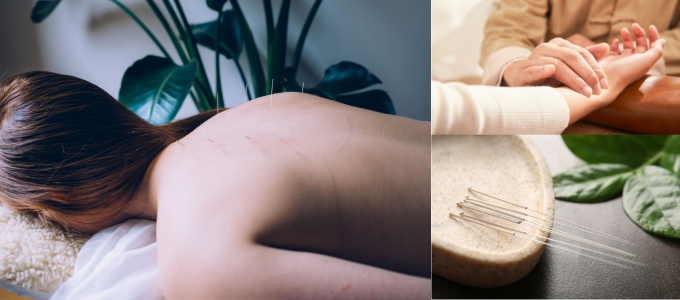
Acupuncture may be used as a complementary approach to help manage menstrual pain, premenstrual symptoms, and stress. Research suggests it may help some people with menstrual pain, although the certainty of the evidence varies.
Treatment can be tailored to concerns such as cramping, irritability, headaches, breast tenderness, and changes in mood or sleep. It may also support relaxation and help some people manage stress, which can influence sleep, mood, and reproductive function.
The goal isn’t simply to address an isolated symptom, but to understand your experience within the context of your overall health.
Severe menstrual pain, unusually heavy bleeding, or significant cycle changes deserve medical assessment, as they can sometimes be associated with conditions such as endometriosis, adenomyosis, or fibroids.
Chinese Medicine and Fertility
Whether you’re preparing for pregnancy, trying to conceive naturally, navigating fertility challenges, or undergoing IVF, the fertility journey can bring physical and emotional challenges.
Chinese medicine traditionally understands reproductive health through the relationship between Kidney energy, Qi and Blood, the menstrual cycle, and the body’s overall balance.
Acupuncture and individualized nutritional and lifestyle support may complement fertility care, particularly around stress, menstrual discomfort, and general wellbeing. Research on acupuncture and fertility outcomes remains mixed, however, and acupuncture has not been established as a treatment that reliably increases pregnancy or live birth rates. It should not replace fertility investigations or medical treatment.
For those undergoing IVF or other assisted reproductive treatments, acupuncture may be considered alongside fertility care, with treatment coordinated around ovarian stimulation, egg retrieval, embryo transfer, and pregnancy.
Every fertility journey is different. Support should honour your individual circumstances, needs, and reproductive goals.
Food, Digestion & Reproductive Health
Food is another important part of the conversation. Adequate energy and essential nutrients support overall health and normal reproductive function, while Chinese dietary therapy offers a traditional perspective on digestion, nourishment, and qualities such as warming and cooling.
Depending on your needs, nutritional support may include regular balanced meals, adequate protein and healthy fats, varied plant foods, attention to iron intake, particularly with heavy menstrual bleeding, and appropriate folic acid supplementation when preparing for pregnancy.
Supporting digestive comfort and avoiding unnecessarily restrictive eating patterns can also be important. There is no single diet that works for everyone. Your nutritional needs, health history, and relationship with food all matter.
Supporting Reproductive Health Through Life
Our reproductive health changes throughout life, and the support we need changes with it.
During the reproductive years, care may focus on menstrual discomfort, premenstrual symptoms, and cycle-related changes.
When preparing for pregnancy, nutritional support, stress management, and collaboration with fertility or preconception services may be helpful.
During pregnancy and postpartum, treatment and nutritional considerations need to be adapted to the individual’s stage, with appropriate medical guidance.
During perimenopause, changing hormone levels can affect menstrual patterns, sleep, mood, and overall wellbeing. Acupuncture and lifestyle support may help some people manage certain symptoms alongside appropriate medical care.
Your Cycle Is Part of Your Health Story
Menstrual and reproductive health are connected to much more than hormones alone. Nutrition, digestion, sleep, stress, underlying medical conditions, and our individual experiences all contribute to the bigger picture.
East Asian medicine offers a way of looking at these relationships, while acupuncture and nutritional support can complement conventional healthcare.
At Local Health, individualized care begins with understanding you: your symptoms, your health history, and what wellbeing means in your life.
You don’t need to be trying to conceive to seek support for your reproductive health. Your menstrual wellbeing matters in its own right.
Your cycle is one part of your health story. Understanding it can be an opportunity to develop a deeper relationship with your body and make informed choices about your care.
Mariana Noelle is one of the Registered Acupuncturist at Local Health Integrative Clinic. She is accepting new patients now. You can learn more about Mariana by clicking here, or book directly with her by clicking here.