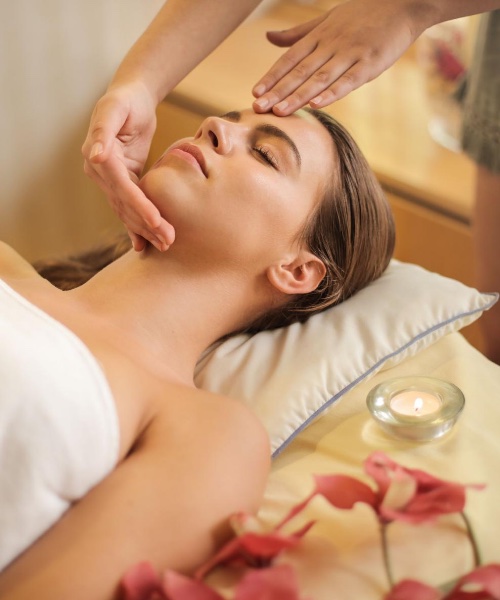


Learn how RMT facial massage works, what it helps with, and why it can support jaw tension, headaches, and overall relaxation.
Facial massage is one of those treatments people are curious about but don’t always fully understand.
At its core, it’s exactly what it sounds like. A registered massage therapist working with the muscles of your face, jaw, scalp, and often the neck and upper chest as well. But once you experience it, you realize it’s doing a lot more than just relaxing the surface.
Your face holds more tension than you might think.
Clenching your jaw, concentrating at a screen, holding expressions throughout the day. It all adds up over time.
That tension can show up as tightness through the jaw, pressure around the temples, headaches, or just a general feeling of fatigue in your face.
Facial massage works by gently releasing that tension.
An RMT uses techniques that help improve circulation, soften muscle tension, and encourage movement in areas that don’t usually get much attention. This can include the jaw, cheeks, forehead, and even inside the mouth with buccal massage, depending on the practitioner and the treatment.
It’s a different experience from a typical full-body massage.
The pace is usually slower. The pressure is more precise. And because the face is so connected to the nervous system, people often notice a deeper sense of calm during and after the session.
For some, it’s about relaxation.
For others, it’s more targeted. Jaw tension, TMJ discomfort, or tension headaches can all be supported through this type of work.
One of the things people notice most is how connected everything feels.
Releasing tension in the jaw can change how your neck feels.
Working through the scalp can shift pressure through the head.
Even your shoulders can feel different afterward.
It’s all part of the same system.
Facial massage is also often paired with other techniques like lymphatic drainage or craniosacral therapy, depending on what the practitioner is trained in. These approaches can support fluid movement, reduce puffiness, and help the body settle more fully.
It’s not about doing more.
It’s about working in areas that are often overlooked and giving your body a chance to reset in a quieter, more focused way.
Here at Local Health, we have some amazing RMTs that have extra training and experience delivering facial massages: Alli Hayes, Shelby Green, and Cameron Baker are all great choices. Find their availability here. Your face (and whole nervous system) will thank you!
Learn more about Facial Massage in Vancouver:
1. What is an RMT facial massage?
An RMT facial massage is a treatment performed by a registered massage therapist that focuses on the muscles of the face, jaw, scalp, and surrounding areas to release tension and improve circulation.
2. What does facial massage help with?
Facial massage can help with jaw tension, TMJ discomfort, headaches, facial tightness, and overall relaxation by working directly with the muscles and connective tissue in the face.
3. Is facial massage good for TMJ?
Facial massage can support TMJ by helping to release tension in the jaw muscles, improve movement, and reduce the strain that builds from clenching or grinding.
4. What is buccal massage?
Buccal massage is a technique where the therapist works both inside and outside the mouth to release deeper tension in the jaw and cheek muscles.
5. How is facial massage different from a regular massage?
Facial massage is more focused and precise, targeting smaller muscle groups in the face and jaw, often with slower techniques and less pressure than a full-body massage.
6. How often should you get a facial massage?
Frequency depends on your goals, but many people benefit from regular sessions to maintain relaxation, reduce tension, and support overall muscle function.